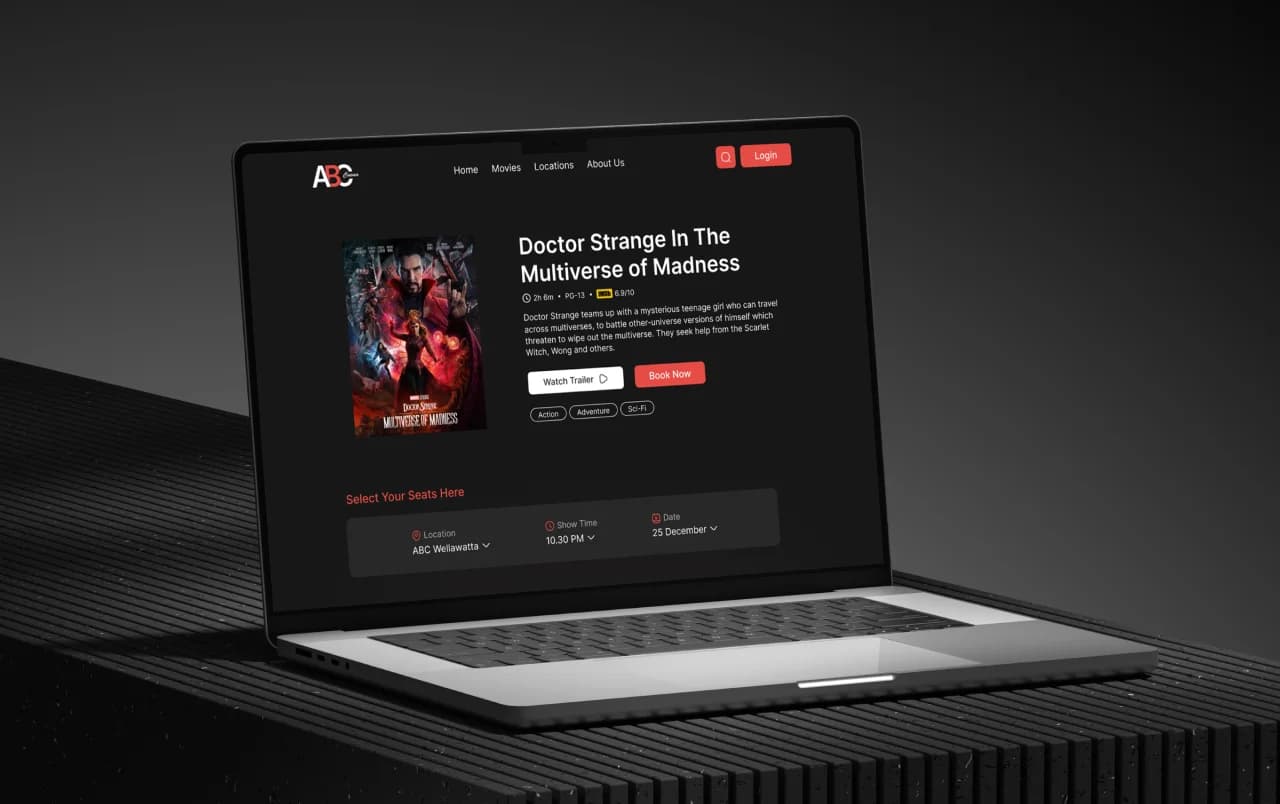
Collaborative Full-Stack Event Platform
Ticket Booking Platform
Client
Collaborative project
Timeline
2 Months
Role
Full-Stack Developer
Year
2025

A role-based ticket marketplace where buyers discover and book events, sellers manage events and ticket inventory, and admins control approvals and transactions.
Next.js 15 / React 19 / TypeScript / Prisma / MongoDB / NextAuth / Redis / Tailwind CSS
The Ticket Booking Platform is a collaborative full-stack application built with Next.js 15, React 19, TypeScript, Prisma, and MongoDB. It supports buyers, sellers, and administrators through one connected event marketplace. Sellers complete email verification and administrative approval before creating events and ticket inventory; buyers create bookings and payments; and administrators supervise users, event approvals, financial transactions, and platform operations.
The Challenge
A multi-role ticket marketplace must keep authentication, seller onboarding, event approval, ticket availability, bookings, sales, payments, and money movement consistent across several user journeys. The platform also needed secure password recovery, time-limited verification tokens, reliable email delivery, cache-aware lookups, and protected admin access without exposing sensitive account information.
The Impact
The architecture establishes a scalable event commerce foundation with controlled seller access, structured booking and payment states, traceable transactions, Redis-backed security workflows, and responsive user experiences for marketplace discovery and administration.
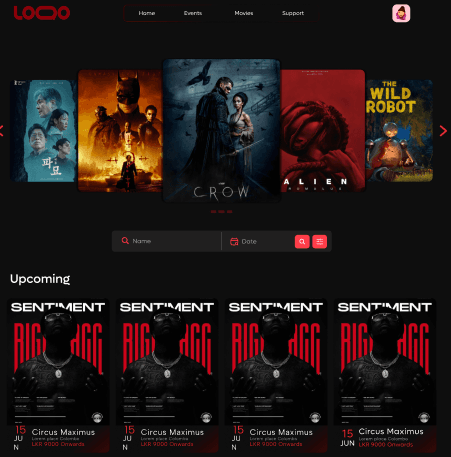
Ticket Platform Home
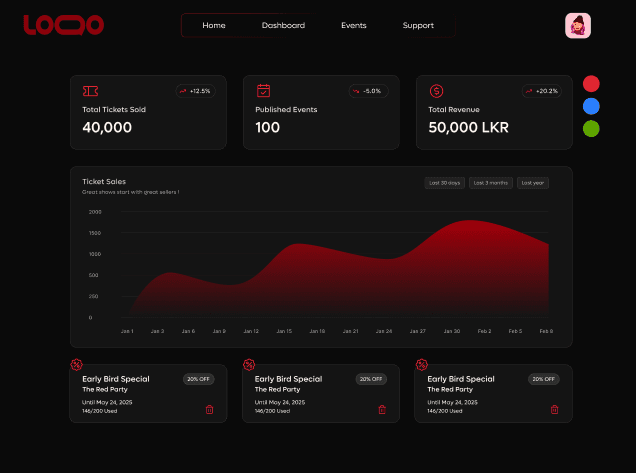
Operations Dashboard
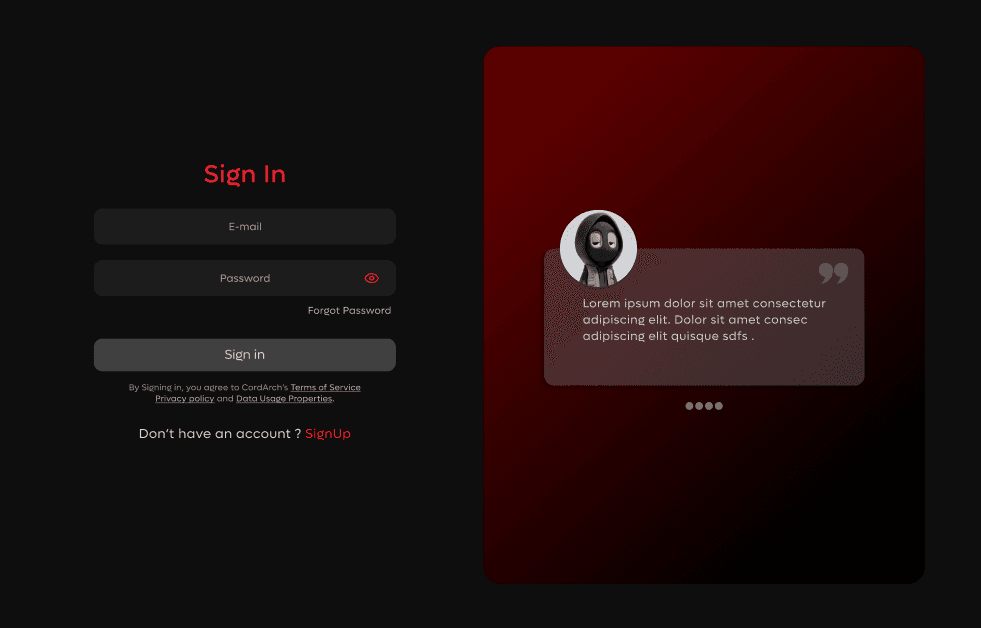
Sign In
Saved Events
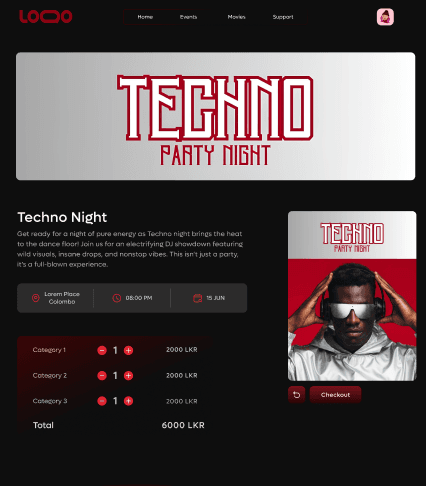
Ticket Pricing
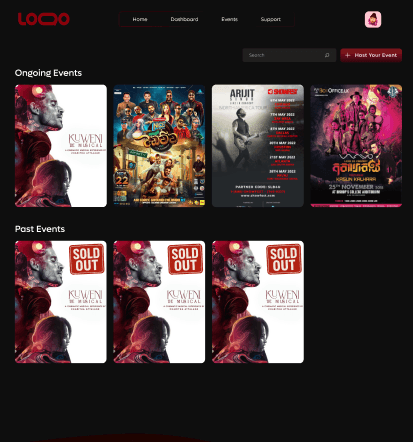
User Feed
- 01
Buyer Role: Discover approved events, choose ticket types and quantities, create bookings, and complete payment workflows.
- 02
Seller Role: Register with identity and company information, verify email ownership, await admin approval, and manage event inventory.
- 03
Admin Role: Access protected administrative routes, review sellers, approve events, supervise transactions, and manage platform operations.
- 04
Middleware protects admin pages and redirects authenticated users according to their assigned role.
- 05
NextAuth credentials, JWT sessions, Redis caching, and verification-state checks work together across authentication flows.
Seller Onboarding & Approval
- Seller registration collects name, contact, identity, company, and address information.
- Zod validates submitted fields before user creation.
- bcrypt hashes seller passwords before MongoDB persistence.
- New seller accounts begin unverified with a pending administrative approval status.
- Email verification uses a token and email pair, hashed token storage, a 24-hour expiry, and one-time invalidation.
- Verification status checks query Redis first and fall back to MongoDB when the cache is unavailable.
- Resending a verification email invalidates the previous token before creating a replacement.
Events & Ticket Inventory
- Sellers create events with title, description, date, time, location, collection, subcollection, and banner image data.
- Events move through draft, pending, approved, or rejected states before publication.
- Admin approval records the approving user and approval timestamp.
- Each event supports multiple ticket types with price, total quantity, remaining inventory, and availability state.
- Event collections support structured marketplace browsing and categorization.
Booking, Sales & Payments
- Buyers create bookings against an event with ticket type, quantity, total amount, booking state, and payment state.
- Booking states distinguish pending, confirmed, cancelled, and failed workflows.
- A completed booking can connect to one sale containing ticket quantity, total price, and sale status.
- Buyer information is stored against a sale for fulfillment and contact workflows.
- Payment records support card and PayPal methods with pending, completed, or failed statuses.
- Payment references and timestamps support traceability across completed purchases.
Project Type
Collaborative full-stack web application
Contribution
Exact personal modules to be confirmed from Git history or contribution notes
User Roles
Admin, seller, and buyer
Platform
Responsive Next.js event ticket marketplace
Data Model
MongoDB with Prisma ORM
Application
Next.js 15 and React 19 — Server and client experiences for buyers, sellers, and administrators
Language
TypeScript — Type-safe application, API, validation, and state-management code
UI
Tailwind CSS 4, shadcn/ui, and Radix UI — Responsive interfaces and accessible reusable components
Authentication
NextAuth and JWT — Credential sign-in, sessions, verification checks, and role-aware access
Database
MongoDB — Persistent users, events, tickets, bookings, sales, payments, and transactions
ORM
Prisma 6 — Typed data models, relations, database access, and schema management
Cache
Upstash Redis — Authentication caching and expiring verification or password-reset tokens
Validation
Zod — Request validation, strong password rules, and field-specific error feedback
Security
bcrypt — Password hashing and secure credential comparison
Nodemailer — Verification, password recovery, and seller approval messages
State
Redux Toolkit — Shared client-side application state across booking experiences
Uploads
UploadThing — Managed image and file upload workflows
Authentication & Session Management
- NextAuth exposes sign-in and session endpoints through the application API.
- Credential authentication validates email and password before comparing bcrypt hashes.
- JWT-backed sessions carry user identity and role information across protected workflows.
- Redis caches frequently accessed user data to reduce repeated database reads.
- Authentication logic checks account verification status and returns controlled custom errors when access requirements are not met.
Password Recovery Security
- Forgot-password requests are validated through Zod before processing.
- The endpoint always returns a generic response, preventing attackers from discovering registered email addresses.
- Cryptographically secure reset tokens are hashed and stored in Redis with a one-hour expiry.
- Reset requests verify both the token and associated email before changing credentials.
- New passwords must satisfy validation rules and are persisted only after bcrypt hashing.
- Successful resets invalidate tokens immediately, making each reset link single-use.
Financial Transaction Model
- Transactions connect each sale to sender, recipient, and processing administrator records.
- Transaction types distinguish buyer payments, administrative payments, and seller payments.
- Direction fields record incoming and outgoing money movement.
- Amount, currency, status, reference, processing user, and timestamps provide an auditable financial trail.
- Pending, completed, and failed states support controlled settlement workflows.
Data Architecture
- The Prisma schema models users, events, tickets, bookings, sales, buyer information, payments, transactions, settings, and event collections.
- MongoDB ObjectIds connect relational-style Prisma associations across marketplace records.
- Unique email, user ID, sale, payment, booking, and settings constraints protect important one-to-one or identity relationships.
- Created and updated timestamps provide lifecycle visibility across accounts, events, bookings, and platform settings.
- Enumerated roles and workflow statuses keep approval, booking, payment, and transaction state transitions explicit.
Email & Token Services
- Nodemailer sends seller verification, password recovery, and account approval or rejection emails.
- HTML templates inject user-specific links and status information into each message.
- Token utilities handle cryptographic generation, hashing, expiration, storage, retrieval, and invalidation.
- Separate Redis mappings connect tokens and emails while avoiding raw token persistence.
- Retry-aware error handling supports more dependable email workflows.
Frontend & Engineering Tooling
- Redux Toolkit and React Redux provide shared client state while SessionProvider exposes authentication state.
- Framer Motion, Swiper, and Embla Carousel support animated and media-rich user experiences.
- Next Image is configured for GitHub avatars, TMDB artwork, media sources, and Unsplash content.
- Biome, ESLint, TypeScript, and Husky support formatting, validation, and commit-time development quality.
- Prisma generation and deployment scripts prepare the data client and synchronize schema changes.
Contribution Note
- The supplied schema and API documentation verify the platform architecture and implemented modules.
- They do not identify which teammate authored each feature.
- The personal-contribution section should be finalized using Git commits, pull requests, or a written list of the modules completed by Methum.